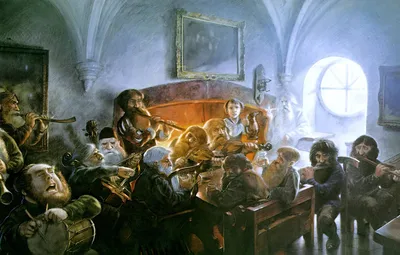
Dwarf
The Dwarves, or Khazâd in their own tongue, were beings of short stature, often friendly with Hobbits although long suspicious of Elves. They were typically blacksmiths and stoneworkers by profession, unrivalled in some of their arts even by the Elves.
The Dwarves, or Khazâd in their own tongue, were beings of short stature, often friendly with Hobbits although long suspicious of Elves. They were typically blacksmiths and stoneworkers by profession, unrivalled in some of their arts even by the Elves.
While there were seven Houses of the Dwarves, the most prominent was that of the Longbeards.
Origins
Unlike Elves and Men, the Dwarves are not counted among the Children of Ilúvatar. Their creator was Mahal, known as Aulë the Smith. Aulë created the Seven Fathers of the Dwarves, from whom all other Dwarves are descended, deep beneath an unknown mountain somewhere in Middle-earth. However, Aulë did not have the divine power to grant independent life to any creation, and the dwarves were bound to his will. Ilúvatar came and reprimanded Aulë, who confessed his desire to create more living things, but in repentance lifted his hammer to destroy the dwarves. Even as the blow was about to land, the dwarves cowered and begged for mercy, as Ilúvatar had taken pity and given true life to the creations of his child, including them in His plan for Arda. However, Ilúvatar did not wish them to wake before the Elves, whom he intended to be the first-born. Ilúvatar granted the Dwarves life, and therefore they are known as the Adopted Children of Ilúvatar, but he bade Aulë lay them to sleep in their chamber deep beneath the mountain, and they were to awake after the Awakening of the Elves.
The Seven Fathers awoke in their places in pairs with their wives, though Durin I had awoken alone. The seven different groups of Dwarf-folk originated in the locations where the Seven Fathers of the Dwarves first awoke.
The seven clans of the Dwarves were:
- Longbeards, Durin's Folk, originally from Gundabad.
- Firebeards and Broadbeams, originally from the Blue Mountains.
- Ironfists and Stiffbeards, originated in the East.
- Blacklocks and Stonefoots, originated in the East.
Durin settled in the caves above Kheled-zâram which later became the greatest of Dwarf realms, Khazad-dûm. Therefore the halls of the Longbeards were not located near the halls of another Dwarf-kingdom.
There was also an eighth group of Dwarves that was not a separate member from these seven kindreds, but composed of exiles from each: the Petty-dwarves, who were hunted like animals to the point of extinction by the Elves in the First Age.
Characteristics
They were about 4 ft. high at least and their more distinctive characteristic was their beard which they have from the beginning of their lives, male and females alike; and it is said that they could die of shame if they were subjected to shaving.
They had a tendency toward gold lust and committed their share of rash and greedy acts. Among these was the dispute over the Nauglamír, which led to the slaying of Elu Thingol and stirred up the initial suspicion between Elves and Dwarves to open hatred.
Dwarves generally lived far from the sea and avoided getting on boats, as they disliked the sound of the ocean and were afraid of it.
Wicked Dwarves
Of the people of Middle-earth, Dwarves are the most resistant to corruption and influence of Morgoth and later Sauron. The seven rings of Power of the dwarves did not turn them to evil, but it did amplify their greed and lust for gold. It is said that very few wilfully served the side of darkness.
In the First Age, the Petty Dwarves that dwelt in Beleriand were descendants of Dwarves exiled for evil deeds from their great mansions of their kind. And after their Awakening, some Men had met Dwarves of the East who had fallen under the Shadow and were of evil mind and were distrustful of their race. Of the Seven Houses, few fought on either side during the War of the Last Alliance at the end of the Second Age, and it's known that none from the House of Durin ever fought on the side of evil.
During the early parts of the Third Age (or at least in legends of the previous), it is known that in some places wicked dwarves had made alliances with Orcs. Those most likely came from the Dwarves of the far eastern mansions.
However, it is said that there was an enmity between some Dwarves and some Men of old (who were jealous of the Dwarves's wealth and works), and the latter alleged evil things about the Dwarves.
Skills and industries
As creations of Aulë, they were attracted to the substances of Arda and crafts. They mined and worked precious metals throughout the mountains of Middle-earth. They were considered unrivalled in arts such as smithing, crafting, metalworking, and masonry, even by the Noldor.
The Dwarves were the greatest miners ever to exist in Middle-earth, building immense halls under mountains where they built their cities. They built many famed halls including Menegroth, the fairest dwelling of any king that has been east of the Sea, Nargothrond, Khazad-dum, the grandest mansions of the Dwarves, the Elvenking's Halls, and the Kingdom Under the Mountain.
In the darkness of Arda already the Dwarves wrought great works for even from the first days of their Fathers they had marvellous skill with metals and with stone; but in that ancient time iron and copper they loved to work, rather than silver and gold.
In the tempering of steel alone of all crafts the Dwarves were never outmatched even by the Noldor, and in the making of mail of linked rings, which was first contrived by the smiths of Belegost, their work had no rival. During the third age of the captivity of Melkor, the Dwarves smithied for Thingol; for they were greatly skilled in such work, though none among them surpassed the craftsmen of Nogrod, of whom Telchar the smith was greatest in renown.
They were also capable masons and smiths - Dwarven smithing skills were said to be unrivalled, and their masonry creations were bested by none. The crafting skills of the Dwarves were unmatched; they crafted objects of great beauty out of gems and metals. They crafted many famed weapons, armours, and items of art and beauty, among them Narsil, the sword of Elendil, the Dragon-helm of Dor-lómin and the necklace Nauglamír, the most prized treasure in Nargothrond and the most famed Dwarven work of the Elder Days.
In the Third Age, Dwarves wrought with patient craft works of metal and stone that now none can rival. However, as stated by Gloin at the Council of Elrond, the Dwarves of Erebor have surpassed their predecessors in mining and building before Smaug descended on the Lonely Mountain, but not in metal-work, smithing or the making of mail, as their predecessors' secrets have been long lost.
Hardiness
The Dwarves were created by Aulë to be strong, resistant to fire and the evils of Morgoth. They were hardier than any other race, secretive, stubborn, and steadfast in enmity or loyalty.
The Dwarves are described as "the most redoubtable warriors of all the Speaking Peoples" — a warlike race who would fight fiercely against whoever aggrieved them including Dwarves of "other mansions and lordships". Highly skilled in the making of weapons and armour, their main weapon is the battle axe, but they also use bows, swords, shields, and mattocks.
They are resistant to fire, more than Elves or Men. Sickness was almost unknown to the Dwarves, as they were immune to human diseases.
They were generally less corruptible than Men. When Sauron attempted to enslave the Free Folk of Middle-earth using the Rings of Power, the Elves completely resisted his power (indeed, his hand had never sullied the Three Rings), while the Nine Rings utterly corrupted the Men who bore them into the Ringwraiths. In contrast, the Dwarves were sturdy and resistant enough that Sauron was not able to dominate them using the Seven Rings. At most, the Seven Rings sowed strife among the Dwarves and filled their wearers with an insatiable greed for gold, but they did not turn them into wraiths subservient to the Dark Lord, and he considered his plan to have failed. Sauron was furious at the Dwarves' resistance, spurring his drive to recapture the Seven Rings from them.
Another example was Gimli, who, while Saruman used the power in his voice and the Rohirrim were spell-bound by his magic, Gimli was unmoved and commented that Saruman's words cannot be trusted, causing Saruman to be angered enough to lose his charm.
Lifespan
The lifespan of Dwarves was varied depending on their "breed". The Longbeards were particularly long-lived, but by the Third Age, their lifespan was diminished and they lived, on average, 250 years. The Kings of Durin's Folk named "Durin" were particularly long-lived. Occasionally they would live up to 300 years of age, and Dwalin reached the rare lifespan of 340 years (comparable to a Middle Man living to 100).
Until they were around 30 years of age, Dwarves were considered too young for heavy labour or war (hence the slaying of Azog by Dain Ironfoot at age 32 was a great feat). By the age of 40, Dwarves were hardened into the appearance that they would keep for most of their lives. Between the approximate ages of 40 and 240, most Dwarves were equally hale and able to work and fight with vigour. They took on the appearance of age only about ten years before their death, wrinkling and greying rapidly, but never going bald.
Although Dwarves did not suffer from diseases, corpulence could affect them. In prosperous circumstances, many grew fat by the age of 200 and became physically inept.
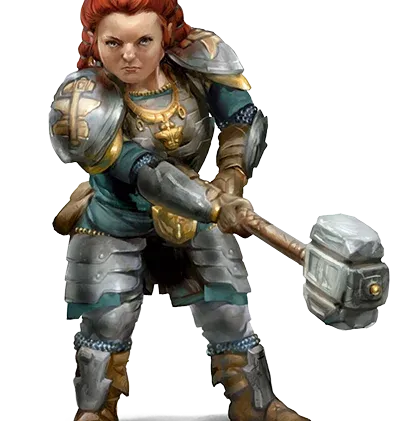
Artwork
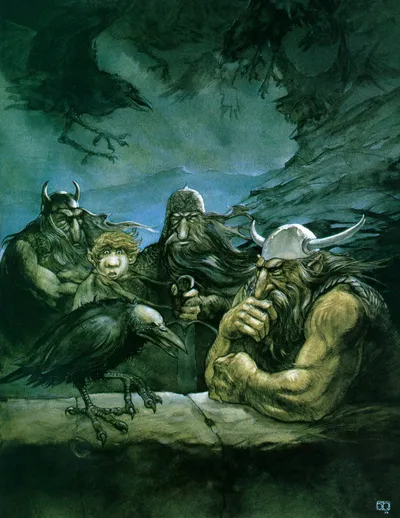
Dwarves and the Raven
John Howe