Lúthien
Lúthien dancing in the woods, by Ted Nasmith
Biography
Early years
Lúthien was the daughter of Elu Thingol, the Elven King of Doriath, and his Queen, Melian the Maia. She was born in YT 1200 at the end of the first age of the Chaining of Melkor in the forest of Neldoreth, during the Sleep of Yavanna under the starlight of the heavens before the Sun and Moon, and the gracefulness of her very presence caused the white flowers of Niphredil to grow in Neldoreth. Throughout the years before she met Beren, she lived as all the Elves of Doriath did: in a state of perfect blissful peace. She was a woman of incomparable beauty and grace, with night-dark hair, sparkling grey eyes, luminous skin, and a clear heartbreakingly lovely voice that was said to cause winter to melt into spring - "the song of Lúthien released the bonds of winter, and the frozen waters spoke, and flowers sprang from the cold earth where her feet had passed".
She often enjoyed dancing in the woods of the realm to the music of her good friend Daeron's flute. He himself soon came to love her jealously, though she would not return it.
Quest for the Silmaril
Lúthien was remembered in the Lay of Leithian as the first immortal woman to ever fall in love and marry a mortal man, who in her case was Beren, a man of the House of Bëor whom she met in the woods of Doriath. Their relationship was unlikely from the beginning: Lúthien was not only the cherished single daughter of the most powerful Elven King in Beleriand, but also the daughter of a Maia, a powerful angelic being of the race of the Ainur. Beren was a mortal man on the run from the first Dark Lord Morgoth.
Thingol was determined to forbid Beren marry his daughter, and gave him an impossible task as the bride price: Beren had to bring to Thingol one of the Silmarils from Morgoth's iron crown. Against monstrous odds, including being kidnapped by the Sons of Fëanor and the death of Finrod Felagund, as well as a confrontation with Sauron, the couple achieved the task with help from Huan, the Hound of Valinor - but Beren died as soon as the task was completed. In grief, Lúthien soon lay down and died, passing to the Halls of Mandos. There, in her grief, she sang to the Vala Mandos. Her song was of such beauty that Mandos, for the first and only time in his existence, was moved to pity. But Mandos had no authority to allow Beren to live again, so he went before Manwë for advice, who in turn sought out the counsel of Eru Ilúvatar himself. Two choices were then placed before Lúthien: she could either dwell in Valmar with the Valar in bliss forever, as reward for all that she had accomplished, or she could be restored to earthly life again with Beren, on the condition that they would both be mortal and die the death of Men. For her love for Beren, Lúthien chose the latter.
Later years
After this, she became a mortal and returned to life with Beren, dwelling briefly on Tol Galen. They had a son, Dior, who was called Elúchil, the Heir of Thingol.
After the sack of Menegroth, Beren ambushed the Dwarves responsible and took the Nauglamír back to Lúthien. Her beauty combined with the splendor of the Silmaril and necklace to make her home of Tol Galen the fairest land ever to have existed east of Valinor. On her death, the Nauglamír was delivered to her son Dior, which led to the ruin of Doriath.
Legacy
The union of Beren and Lúthien was the first between a mortal Man and a maid with Elven heritage. Her granddaughter Elwing married Earendil, son of Tuor and Idril, thus becoming the great-grandmother of Elrond and Elros, the first being one of the most influential figures of the Second and Third Age and the second the first King of Númenor. Her lineage passed down to the royal House of Elros of Númenor, and then through Silmariën to the Lords of Andúnië and the House of Elendil. When Aragorn II and Arwen married, the two lines of Lúthien's descendants were reunited, continuing her bloodline on to the Kings of the Reunited Kingdom and beyond. Lúthien's romance with Beren is one of the great stories of the Elder Days, and is mirrored by the later romance between Aragorn and Arwen Evenstar. According to legend, her line would never be broken as long as the world lasted.
Due to everything she experienced from her decision to become mortal, Elwing decided upon the fate of the Elves for her and her husband, as she did not want to experience the same fate as her grandmother.
Etymology
The name Lúthien means "Daughter of Flowers", from the Sindarin luth (derived from loth), meaning "flower". In Doriathrin, Luthien (or in Noldorin, Lhūthien) means "enchantress", derived from luktiēnē ("enchantress"). Lúthien may have been derived from the Old English word Lufien, which means "love".
Tinúviel means "Nightingale", from the Quenya tindōmiselde. In Sindarin, it means "Daughter of Twilight", from tinnu ("dusk, twilight") and the feminine suffix -ien ("daughter").
Background
Lúthien is supposed to have been based on Edith Tolkien, J.R.R. Tolkien's wife. The first tale she appeared in, The Tale of Tinúviel, was in part inspired by Edith and John Ronald's forest walks, in 1917, in Roos, England - as Beren first saw and fell in love with Lúthien in the woods.
Edith Tolkien was buried in Wolvercote Cemetery (North Oxford), and this writing in on her plaque:
The name of Beren appears on J.R.R. Tolkien's plaque:
In other versions
In the earlier versions of The Tale of Tinúviel, Tolkien's earliest form of Lúthien's tale later published in The Book of Lost Tales Part One, Lúthien's name is Tinúviel, and Beren is an Elf. In this versions the character Sauron has not yet emerged and his role is taken by a monstrous giant cat called Tevildo, the Prince of Cats. In another account, Tinfang was the brother of Tinúviel.
Line of the Half-elves
The marriages between Elves and Men are in bold.
The Half-elves or the Peredhil are in italic.
Appearances & mentions
- The Lord of the Rings (mentioned only)
- The Fellowship of the Ring (mentioned only)
- The Two Towers (mentioned only)
- The Return of the King (mentioned only)
- The Silmarillion
- Unfinished Tales of Númenor and Middle-earth
- The Children of Húrin (mentioned only)
- Beren and Lúthien
- The Fall of Gondolin (mentioned only)
Translations
References
Settings
Artwork
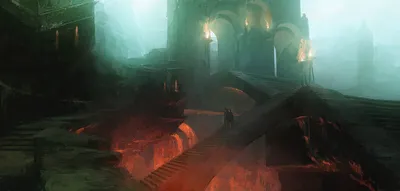
Beren and Luthien flee Angband
Pete Amachree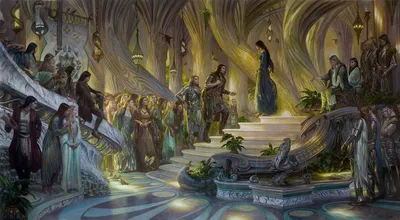
Beren and Luthien in the Court of Thingol and Melian
Donato Giancola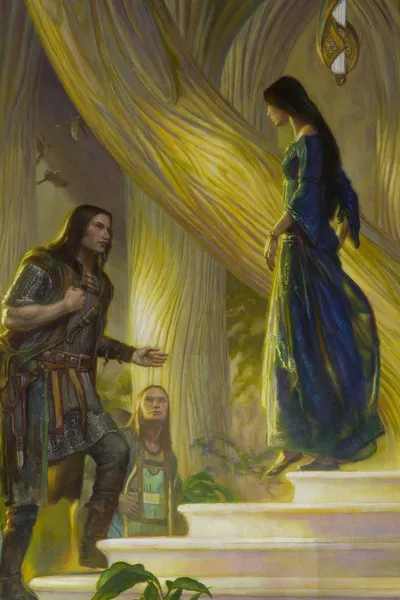
Court of Thingol and Melian Beren Luthien
Donato Giancola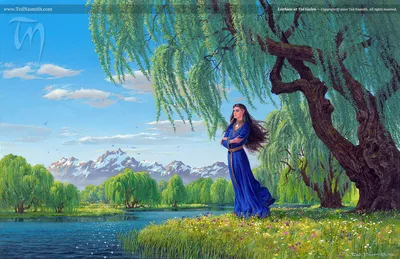
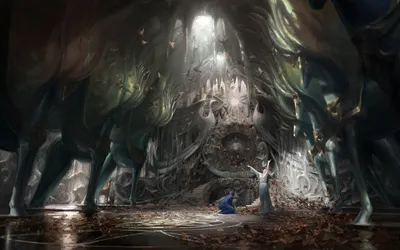
Luthien at Tol Galen
Ted Nasmith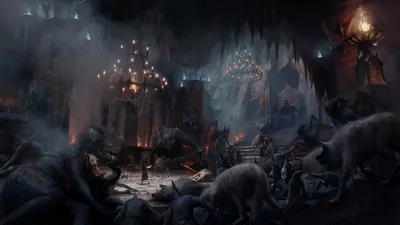
Luthien in the court of Morgoth
Pete Amachree