Maps
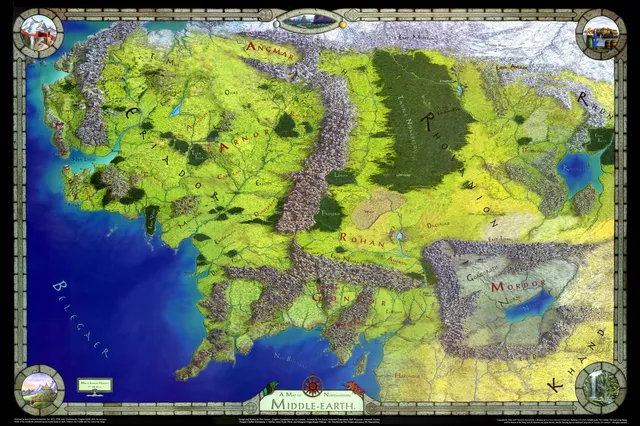
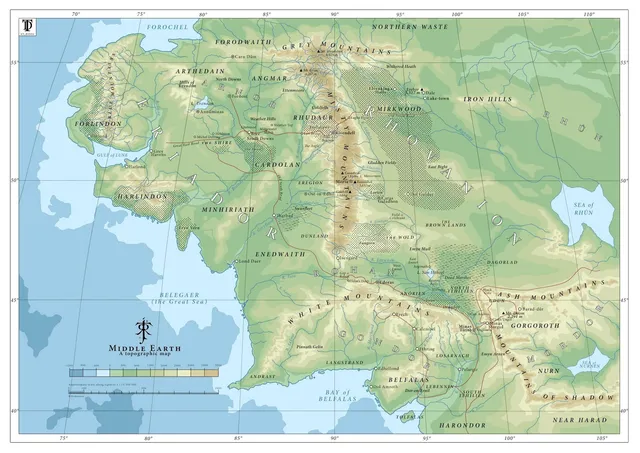



Dol Guldur was originally called Amon Lanc ("Naked Hill"), because trees did not grow on its summit. The Silvan Elves of King Oropher had ancient dwellings near Amon Lanc, but left them and migrated northwards when they received disturbing rumours about the rising power of Sauron long before the War of the Last Alliance.
Somewhere after T.A. 1000, an evil presence took over Amon Lanc. It was in 1050 that a shadow fell upon Greenwood and it began to be called Mirkwood. The hostile entity was known as "the Necromancer" by the peoples. The Silvan Elves of King Thranduil, the son of Oropher who had died in the War of the Last Alliance retreated from the spreading shadow further north to the north-east of Mirkwood.
Around T.A. 1100 the Wise consisting of the Istari and the chief Eldar found out that an evil power had made a stronghold at Dol Guldur and thought that it was one of the Nazgûl.
The Council of the Wise long feared the Necromancer might be none other than Sauron himself who secretly regained his powers after his defeat in the War of the Last Alliance. In 2063 Gandalf went to Dol Guldur, and the "Necromancer", not yet powerful, fled to the East so as not to be identified.
After four centuries in 2460, just as the One Ring was found by Sméagol the Stoor, the "Necromancer" returned there.
In T.A. 2510 a dark shadow and cloud flowed from Dol Guldur whereas a white mist that came from Lothlórien to the west contended with the darkness coming from Mirkwood when Eorl the Young was leading his riders to the Battle of the Field of Celebrant. In reaction Eorl steered his force westward to avoid the phenomenon of the shadow, and they entered the white mist.
In 2845 Thráin II, King of Durin's Folk-in-exile and holder of the last of the Seven Rings of the Dwarves, was on his way to the Lonely Mountain. He was captured near the eaves of Mirkwood, imprisoned and tortured in Dol Guldur's dungeons, and his Ring taken from him. In 2850 Gandalf again entered Dol Guldur, found the dying Thráin, and was entrusted with the map and key to give to Thorin, although Thráin could not tell him his own or his son's name before he died. Gandalf confirmed that the Necromancer, the master of Dol Guldur at that time, was Sauron.
In 2851 Gandalf returned to the White Council and urged an attack on Dol Guldur, but was overruled by Saruman, who secretly had begun searching for the One Ring in the area by then.
Gandalf was concerned that Sauron planned to attack Lórien and Rivendell from Dol Guldur and that he might use the dragon Smaug at Erebor against the Dwarves of the Iron Hills who could resist an attack by the forces of Sauron on the northern passes in the Misty Mountains. Gandalf wanted to find a way to deal with Smaug, but thought that a direct attack against Dol Guldur was needed even more to disturb Sauron's plans and wanted to convince the White Council. In 2941 Saruman finally agreed to an attack, which occurred at the same time as the Quest of Erebor and Sauron fled from Dol Guldur to the East.
In 2951 Sauron came to Mordor, his plans now ready, and sent Khamûl, the second chief, and two other Nazgûl back to Dol Guldur.
In the following decades Dol Guldur must have rebuilt some of its power until the War of the Ring, during which its forces (most likely Orcs) made an attack upon the Woodland Realm on March 15 3019 and three assaults on Lórien on March 11, 15 and 22 of 3019, causing grievous damage to the outlying woodlands of Lórien. However each time they were driven back by Thranduil, Celeborn and Galadriel who held the power of Nenya; which only Sauron himself could have overcome.
On March 28 of 3019 Dol Guldur was finally destroyed and cleansed by the Elves of Lórien, led by Celeborn and Galadriel, after Sauron's fall.